
The life of 20th-century Episcopalisn priest Algeron Sidney Crapsey offers a useful lens through which to examine the long-running debate over Christianity’s relationship with capitalism and socialism. For Christians, the question revolves around systems compatible with the moral obligations of the Christian faith. In this debate, Christian Socialists have argued that capitalism and Christian ideals are incompatible, while the inverse is claimed by conservatives in that the ideals of socialism cannot meld with the biblical word. Neil Elliot, in a 2025 article for Religious Socialism, highlights the complexity of the argument, touching upon how different passages in the Bible have been invoked to support both socialist and conservative interpretations of economic life. Crapsey provides an especially interesting historical case because as a priest, he attempted to put socialist ideals into practice, challenging both capitalism and the very foundations of the church in the United States.
Crapsey’s eventual commitment to Christian Socialism developed from a much earlier conviction that Christianity had to be understood through its consequences for human life. Born the grandson of abolitionist Thomas Morris in Fairmount, Ohio in 1847, Crapsey fought for the Union during the American Civil War as a teenager until illnesses led to his discharge. Returning from the war, Crapsey’s experiences increasingly exposed him to economic insecurity as he worked various jobs in Washington, D.C., including storekeeper, postal worker, and office keeper for his father’s law practice. These experiences gave him an early familiarity with precarious employment, while his time searching for work when he lived in New York City made the possibility of houselessness feel personally immediate.
His intellectual development evolved in every role he held, most significantly as an office keeper. While working in his father’s law office, Crapsey spent his idle hours reading from its library, where he developed an interest in literature, public speaking, and eventually the Bible. He writes about this encounter as transformative in his 1924 autobiography, The Last of the Heretics: “From what little I knew of it I was not attracted to the Bible; it was to me a sacred and stupid book; it was a holy book and I left it alone in its holiness. But in a single hour this attitude was swept away and the Bible became to me an inspiration and a delight.” This moment established a significant foundation for his belief that Christianity, along with being a collection of doctrines, was an intellectual and moral framework through which social problems could be confronted.
Crapsey entered St. Stephen’s College, now Bard College, in 1869 and subsequently studied at the General Theological Seminary in New York City, receiving his divinity degree in 1872. After serving as a deacon at St. Paul’s Chapel of Trinity Parish in the city, he was ordained as a priest in 1873 until he and his family later moved to Rochester, New York to serve as rector for a newly established Episcopalian church, St. Andrew’s. Rochester became an important setting for Crapsey’s spiritual development, as he began translating his understanding of Christianity into institutions and practices that addressed material inequality.
One of Crapsey’s first interventions concerned access to the church itself. With substantial aid from his wife Adelaide, he transformed St. Andrew’s into what was described as “the first free church in the city” by eliminating the practice of charging for pews. By removing a financial barrier to participation, Crapsey helped make the word of God more accessible to the working-class and downtrodden people, challenging how religious institutions tended to reproduce economic distinctions of the society around them. The St. Andrew’s Brotherhood, an inter-denominational group he later established that focused on charity and community support, was ideologically inspired by theologian John Henry Newman, Charles Darwin, Karl Marx, and Social Christianity. Crapsey and his family also established a training center for kindergarten teachers, a night school, and an institution designed to provide further relief to the downtrodden of Rochester known as the Citizens Political Reform Action (CPRA), all of which reflected his belief that Christianity should address the conditions producing poverty.
This emphasis on social conditions became increasingly central to Crapsey’s theology. He described himself as a Christian humanist and credited the Social Gospel with shaping his path as a follower of Christ. In the preface of his autobiography, Crapsey writes, “From first to last I have been a humanist. God has never troubled me. I have taken Him for granted. I studied and in a measure mastered the theology of my church; but it was never vital to me. It was the humanity of Jesus and not His divinity that won and held my allegiance.” Indeed, if Christianity was fundamentally concerned with human dignity, then institutions that systematically denied that dignity became objects of Christian criticism.
His approach to prison reform demonstrates this connection particularly clearly. In 1901, in collaboration with the Prison Association of New York, Reverend Crapsey delivered a sermon at St. Andrew’s critical of the prison system’s use of punitive justice. Optimistic of reforms, he highlights that from 1895 to 1900 the prison population in New York State did decrease by around 2,000. “The public schools,” he declares, “with their more reasonable methods of teaching, the prosperous conditions of the commercial world, the taste for athletic and outdoor sports, all contribute to the general improvement of morality and the diminution of crime.” But he also notes how several problems remained in the punitive methods used in prisons. The Officers brutally mistreated prisoners, physical conditions of the prisons are horrible, and forced idleness, isolation, and degrading work deprived prisoners of their agency and dignity. He called for the destruction of the historically calloused Auburn Prison, and demanded that imprisoned persons be called by their given name rather than their number, and that they be trained in meaningful work.
Later in 1901, Crapsey delivered a sermon at the Metropolitan AME Church in Washington D.C., a predominantly Black church, entitled The Constitutional Defense of the Negro. This sermon is an impassioned polemic against the institution of lynching and a call for the greater enfranchisement of non-white people in the United States as a whole. He situates lynching in the context of the founding of the United States, arguing that the founders, “these gentleman,” committed a “shameful act” by “prating so loudly the right of every man to life, liberty, and the pursuit of happiness” while “depriving some hundreds of thousands of their fellow men of their liberty…”
Crapsey’s social Christianity eventually became a point of controversy within the Rochester region’s diocese by 1906 after engaging with the works of figures such as Charles Darwin and Karl Marx. In the preface of The Last of the Heretics, Crapsey reflects that through studying Darwin he became “an evolutionist, a rationalist, and a disciple of the Higher Criticism,” something that clearly played a role in his shift in the historical foundations of Christianity. In this same preface, Crapsey states that by studying Darwin, Marx, and others, his ideological development led him to feeling that he “could no longer think within the confines of the literal interpretations of the creeds of the Church.”
Through this evolution, the Reverend’s relationship with the diocese, particularly conservative figureheads such as one William David Walker, became one of great contention. This contention came from Craposey’s questioning of the historical doctrine after his exposure to Darwin and others; most notably, Crapsey began to question whether the immaculate conception actually happened. Historian Michael J. Eula explains that Crapsey’s approach to Christianity encompassed the objective of radically altering American capitalism, or, in other words, advocating for a shift from capitalism to socialism. To quote Eula:
Such Christian socialists as [Walter] Rauschenbusch and Crapsey maintained that their movement, for it to have any success, must by definition be a mass movement. This meant that there was a concerted effort to accomplish such goals as public ownership of utilities through success at election time… They were seeking to reach out to as many Americans as possible who would benefit from a socialist transformation of American capitalism. Christian socialists striving to implement change could only do so when supported by a mass party that embodies values that stood in stark contrast to capitalism.
Though there was some sense of contention created from Crapsey’s discussion of Christianity as a social institution, the main basis for contention within the diocese was that the Reverend’s writings contradicted particular doctrines of the faith, as explained by Reverend Hugh M. Jansen’s chapter on Crapsey’s in the 1966 book American Religious Heretics: Formal and Informal Trials. This is most notable in Crapsey’s skepticism concerning the validity of the doctrine surrounding the virgin birth and the divinity of the historical Jesus. In another portion of Religion and Politics, Crapsey states that Jesus’s divinity and successes did not come from being born of a virgin, and that stories such as that were created in response to the “marvelous success of the man.”
These statements and others pushed Walker and a committee of Rochester clergymen to investigate Crapsey’s statements. The first report produced by this investigative committee, by a majority of three, found that the case for presentment lacked sufficient evidence, though they still unanimously condemned the contents of Crapsey’s writings. That the committee did not call for presentment was itself a controversial act. Bishop Walker, for instance, reportedly denounced the “spiritual interpretation of the creeds,” claiming that all contents of said creeds should be taken literally with little if any room for interpretation, as laid out by Jansen. In an article for The Outlook entitled “Honor Among Clergyman,” Crapsey argued that such rigidity leads to internal uncertainty for those battling between upholding the creed and exploring intellectual curiosity. After utilizing a sermon given by Crapsey in December of 1905 as new evidence, the committee called for his presentment in February 1906.
Eventually, Crapsey was put on trial by the church for heresy that coming March. After two months of deliberation at the court house of nearby Batavia, Crapsey was found guilty of heresy in addition to violating his ordination declaration and his vows of “faithfully administering the doctrine and sacraments, of banning all strange doctrines contrary to God’s word, of being diligent to frame and fashion himself and family to the doctrine of Christ, and of setting forward quietness, peace, and love among all Christian people.” The Reverend was set to be removed from the St. Andrew’s at the end of the year.
Though he was officially out from the Episcopalian Church, Crapsey continued to work for the betterment of humanity through the lens of the Social Gospel. In 1907, he served as a delegate to the International Peace Conference at the Hague and engaged in a number of speaking engagements. It was in 1912 that Crapsey became a more explicit Christian Socialist, and though his time as an official member of the Socialist Party of America was brief, his ideological convictions remained with the idea of socialism for the remainder of his life.
Crapsey spoke on the idea and prospects of socialism throughout New York State, including Fredonia, Watertown, Albany, and Frankfort. The Fredonia Censor quoted Crapsey calling socialism “a hope for humanity” and “a menace to the Capitalist class,” citing socialism’s goal of the social ownership and operation of society. Central to Crapsey’s vision of Christian Socialism was the issue of hunger, as reported in The Knickerbocker Press when Crapsey gave a talk in Albany entitled “Shall the People Starve While a Few Live in Luxury?” This same piece states that Crapsey saw the major political issue of the year as “the question of food,” and that the Republican and Democratic Party are both responsible for exacerbating the problems of hunger and poverty.
The Reverend’s work in the fight for socialism and the empowerment of the downtrodden went beyond the lecture circuit. He served as a delegate to the New York Socialist Party’s state convention. At this convention, Crapsey, alongside Schenectady Mayor George R. Lunn, played a role in forming party policy regarding the issue of whether the party should advocate for taxing the church. Through his affiliation with Lunn, Crapsey played a brief role in the Little Falls Textile Strike of 1912-1913. Responding to Mayor Lunn’s mass call for support in the city, Reverend Crapsey ventured to Little Falls, New York wherein he attempted to give a speech to the striking textile workers. Crapsey was arrested in a campaign designed to deny socialists the right of free speech carried out by city police during the strike. This arrest did not prevent him from continuing to show support for the workers’ struggle. As the holidays came closer and the strike continued, Crapsey returned to Little Falls with a bounty of food to ensure that the strikers could enjoy a quality meal for their Thanksgiving.
What does Crapsey’s life teach us about the history of Christian socialism in the United States? Crapsey’s path to socialism parallels that of George R. Lunn, in that through the biblical word and his own life experience, both men found that the only way to alleviate the ailments of society was to apply Christian ideals to the fight for the disenfranchised. Both men represent the historical successes of socialism in terms of its compatibility with Christianity. Crapsey’s evolution, specifically the evolution that occurred near the end of his time at St. Andrew’s, additionally provides a pertinent frame of reference regarding ideological compatibility. Crapsey’s struggle with William David Walker and his heresy trial represents the modern struggle between Christian Socialism and the reactionary doctrine of White Christian Nationalism. Crapsey presented calls for the church to take on progressive political action, questioned certain pieces of Christian doctrine, and rejected the idea that should a clergyman find something he disagrees with or questions in the doctrine, he should either remain silent or leave the church altogether. Walker, a major force of conservatism, represents a staunch adherence to Christian fundamentalism in addition to his own biases embedded into the diocese.
A Christian socialist of conviction and controversy, Crapsey presented significant challenges both to capitalism and the reactionary tenets of the church. In both the pulpit and the party, Crapsey sought to enact “Christianity applied,” just as George Lunn did through his Christian Socialist practices. Though he never held political office, Crapsey’s powerful adherence to his principles and genuine efforts to challenge the structure of such massive institutions can serve as an inspiration to those within the burgeoning socialist movement whether they are pursuing elected office or not. As Donald Trump keeps speaking on the supposed threat of communists and the Democratic National Convention seeks to purge progressives and members of the Democratic Socialists of America from their ranks, Crapsey’s conviction serves as a model for those being targeted by these groups, highlighting the importance of adhering to principles and working to change the world for the better.
J.N. Cheney is an independent Marxist historian. His research focuses primarily on the labor movement, radical politics, and community action in New York’s Mohawk Valley. He is the author of Women, Immigrants, and the Working-Class Battle in Little Falls, New York: The Textile Strike of 1912-1913.
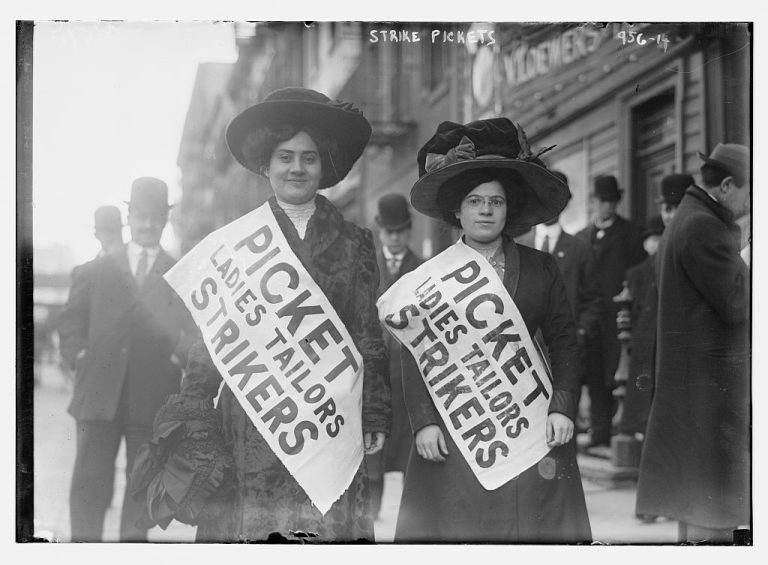
Image Credit: Library of Congress, Prints & Photographs Division, LC-DIG-ggbain-04505 (digital file from original neg.)